AI for dental practices
An AI receptionist for dental offices that answers calls and books patients 24/7
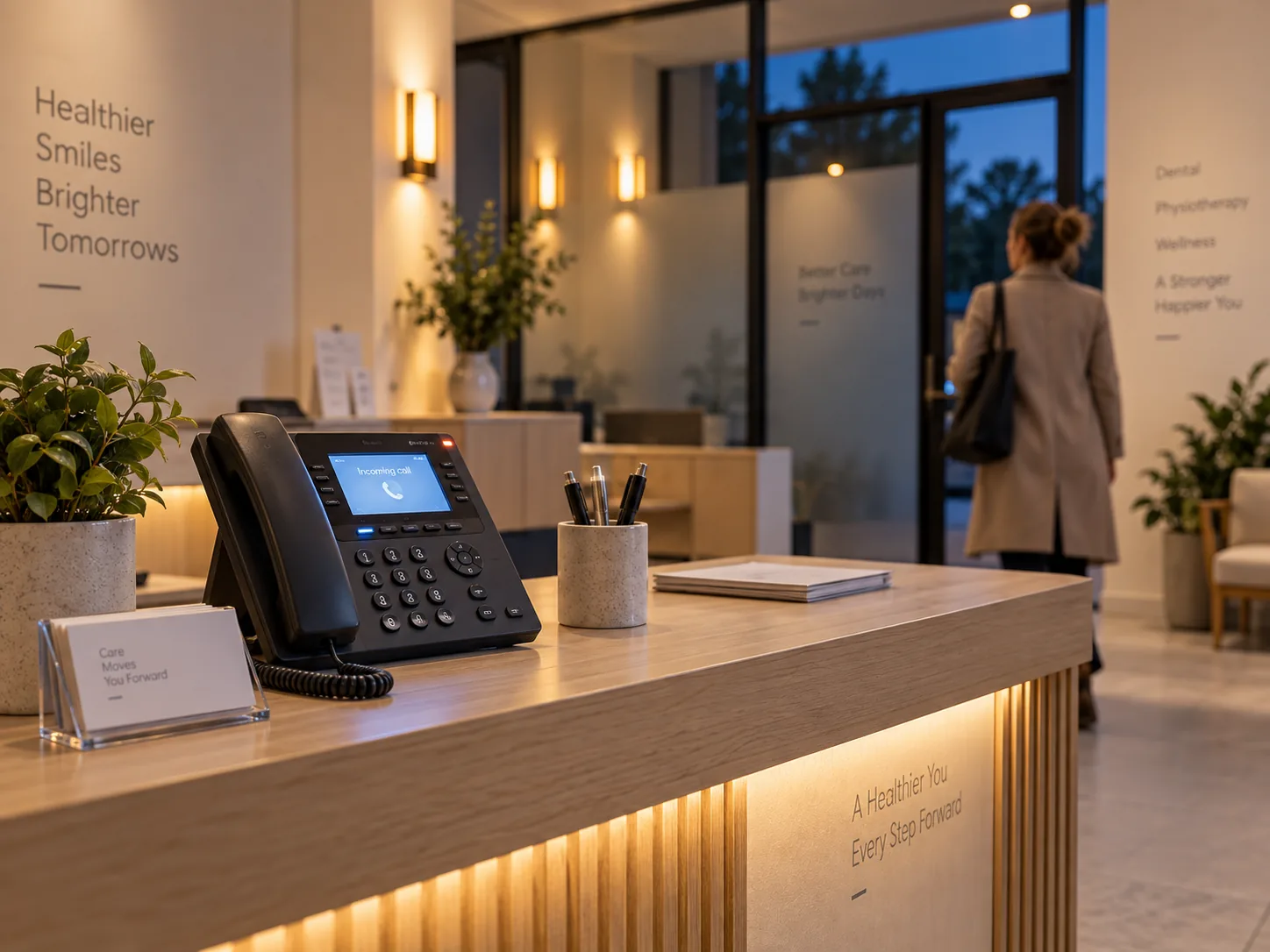
An AI receptionist for dental offices answers the phone on the first ring, books and reschedules visits in your practice management system and sends recall and confirmation messages. It tells callers they are speaking with an AI, gives no clinical advice and passes dental emergencies to your team with the instructions your dentists approve.
What the agent handles
- Calls on the first ring, including lunch and after hours
- Booking, rescheduling and cancellations in your practice software
- Hygiene recall and appointment confirmations
- New-patient questions and intake details
- Dental emergencies routed to your on-call staff
Why dental offices miss calls and lose new patients
Your front desk checks patients in, collects payments, verifies insurance and answers the phone, often in the same minute. During the morning rush, at lunch and after 5 p.m., calls go to voicemail. A caller with tooth pain may simply dial the next practice instead of leaving a message.
The list work suffers too. Someone has to contact patients who are due for a cleaning, confirm tomorrow's schedule and fill the gap when a patient cancels at 8 a.m. When the phones are busy, that work waits, and the result is open chair time.
An AI receptionist takes the routine calls and the list work. Your team spends its time with the patients in the building.
What an AI receptionist for dental offices does
Each task follows your office rules, your schedule templates and the answers your team approves.
Answers calls on the first ring
Calls that would reach voicemail during the morning rush, lunch, evenings or weekends get a live answer. You choose when the agent takes over: all day, after hours or only on overflow.
Books, moves and cancels appointments
It finds open times that match the visit type and provider in your practice management system and sends a text confirmation. When a patient cancels, it can offer the slot to patients on your short-notice list.
Recall reminders and confirmations
It contacts patients who are due for a cleaning and books them into open hygiene time. It also confirms upcoming visits and reschedules patients who can't come, which helps reduce no-shows.
New-patient intake
It collects name, contact details, reason for the visit and insurance plan, then sends your intake forms by text or email. Your team sees a complete record before the first visit.
Insurance and payment basics
It explains which plans you accept, your payment options and what to bring, using information your office approves. Coverage details and cost estimates for a specific patient go to your team.
Routes dental emergencies
Callers who mention pain, swelling, bleeding or a broken tooth follow the path your dentists approve: a transfer to the on-call phone, the next emergency slot or your after-hours instructions. The agent offers no diagnosis.
Connects to your practice software and phones
We connect the agent to the systems your front desk already uses, with access limited to what each task needs.
- Practice management and scheduling software
- Your current office number and phone system
- Text messaging for confirmations and recalls
- Recall and short-notice lists from your practice software
- Online patient forms and intake
- An on-call phone for after-hours emergencies
- A shared inbox or task list for callbacks
Patient privacy and HIPAA guardrails
The agent speaks with your patients and reads parts of their records, so we limit what it can say, see and keep.
- It tells each caller they are speaking with an AI assistant, and a person can take over whenever the caller asks.
- It gives no clinical advice. Questions about symptoms, treatment or medication go to your clinical team.
- The design follows the HIPAA minimum necessary standard: the agent asks for and reads only the patient information each task needs.
- It runs in your practice's own phone, AI and cloud accounts. For U.S. practices covered by HIPAA, the rules call for a business associate agreement (BAA) with each vendor that creates, receives, stores or sends patient information for you. We list those vendors, so your practice can sign each agreement before go-live.
- We set up and test with synthetic patient data wherever possible, so our team works with as little real patient information as it can.
- Your staff can review each call transcript, and your practice sets how long transcripts are kept.
What we measure with your practice
Before the pilot, we pick the numbers that matter to your office, record a baseline and report against it every month.
- Calls answered live
- Share of calls answered without voicemail, split by office hours and after hours.
- New patients booked
- New-patient appointments the agent booked, including those from after-hours calls.
- No-show rate
- Missed visits before and after automated confirmations.
- Recall bookings
- Patients due for a cleaning who booked after the agent contacted them.
From audit to launch in four stages
- 01 · 1–2 weeks
Opportunity and risk audit
We interview your team, map the workflows and rank AI opportunities by payback and risk.
You get: Ranked use cases, ROI model, risk map
- 02 · 4–6 weeks
Pilot with clear success criteria
One agent and one workflow, connected to your real systems and measured against the goal we agreed on. Then you decide whether to continue.
You get: Working agent, results report, go/no-go decision
- 03 · 2–4 weeks
Secure launch
We harden, attack-test and monitor the agent and train your staff before it talks to a single customer.
You get: Security report, operating guides, launch
- 04 · Ongoing
Run and improve
We track quality, cost per workflow and new risks, and keep improving the agent. Short contracts, no lock-in.
You get: Monthly performance and cost report
AI agents for dental practices: FAQ
Can an AI receptionist book dental appointments?
Yes. The agent connects to your practice management or scheduling software and checks open times for the right provider and visit type. Then it books, moves or cancels the appointment. It follows your scheduling rules, such as blocks reserved for new patients and emergencies. If your software has no API, we look for another secure option or start with booking requests your staff confirm.
Is an AI receptionist HIPAA compliant?
HIPAA compliance is not a feature of the software alone. It depends on how your practice sets up and runs the agent. We build it in your own accounts, list each vendor that will handle patient information so you can sign a business associate agreement (BAA) with it, limit the agent to the data each task needs and keep transcripts under your retention rules. The person responsible for privacy in your practice reviews the setup before go-live.
What does an AI receptionist do with a dental emergency call?
Your dentists decide what counts as urgent and what the agent says. In most setups it transfers the caller to the on-call phone, offers the next emergency slot or reads your approved after-hours instructions. It doesn't diagnose or suggest treatment. Callers who describe severe symptoms, such as trouble breathing, are told to contact emergency services in the words your practice approves.
Can an AI receptionist answer dental insurance questions?
It answers the questions your office has approved answers for: which plans you accept, whether you are in network with a plan, payment options and what to bring to the first visit. It doesn't quote coverage or estimate costs for a specific patient. Those questions go to your team as a message with the patient's contact details and plan name.
Can an AI receptionist reduce no-shows at a dental office?
It can help. The agent confirms visits ahead of time by text or phone, lets patients reschedule in the same conversation and offers freed slots to patients on your short-notice list. We measure your no-show rate before the pilot and during it, so you see the effect in your own practice instead of an estimate.
How long does it take to set up an AI receptionist for a dental office?
Most projects start with a 1–2 week audit of your calls, scheduling rules and systems. A pilot at one location follows and takes 4–6 weeks, with success criteria we agree on in advance. Before launch we attack-test the agent, and after launch we run and improve it under a short contract with no lock-in.
Related services and use cases
Use case
AI receptionist
An AI receptionist that answers every call, books appointments 24/7 and transfers urgent callers to your staff. Built for clinics and service businesses.
See how the AI receptionist worksService
AI agent development
Custom AI agent development for support, sales, front desk and back-office work. Voice and chat agents built and attack-tested by a cybersecurity team.
Explore AI agent developmentService
AI security and red teaming
AI security consulting for AI agents and LLM apps: red teaming, prompt injection testing, shadow AI discovery and EU AI Act and ISO/IEC 42001 readiness.
Explore AI security consulting
Free 30-minute assessment
Find the one workflow worth automating first.
Tell us how your team works. We'll come back with two or three AI opportunities, the risks to watch and a rough payback estimate. No obligation.
- A senior engineer replies within one business day
- We can sign an NDA before you share details
- No fixed packages, every quote tailored to you